


“There’s an order when it comes to the law.
It goes man, man’s money, man’s child, the cows…
I know I’ll always be a lot lower than the fetal position.”
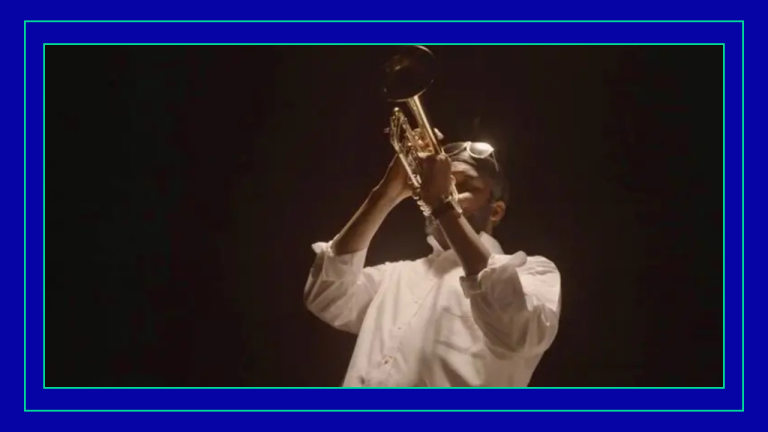
Although the text may read like something ancient, almost scripture-like, these lyrics were in fact released just last month. The lyrics dropped last month in Bangalore-based hip-hop duo RANJ X CLIFR new mixtape 27 CLUB, describing the systems that cage young Tamil women.
That line stayed with me.
As a 24-year-old Tamil woman trying to build a career in producing, it felt like a quiet confirmation of the hierarchies around me. Not just in film, but in the broader cultural systems that shape who gets to lead, decide and create.
Tamil women come from Tamil Nadu in South India and parts of Sri Lanka, belonging to a culture deeply rooted in language, tradition, and generational values. Within this framework, there often exists an unspoken hierarchy shaped by patriarchy, where family structures, marriage, and societal expectations quietly define a woman’s place. From a young age, ideas of obedience, sacrifice, and duty are subtly ingrained, whether it is prioritizing family over individuality, navigating decisions around marriage, or upholding traditions without question. While these norms continue to evolve, they still linger in many households, shaping the lived experiences of Tamil women who constantly find themselves balancing personal identity with cultural expectations.
Growing up Tamil, cinema was never just entertainment. It shaped how we understood love, family, success and identity. But when I was asked who in films I admired, I often didn't have an answer. The women I saw on screen rarely felt like reflections of Tamil girls' real lives.
In Tamil cinema, women are shown as “strong” and “brave,” yet their desires are often secondary. They are expected to be self-sacrificing, family-first, career-second, modest, and mature. But that didn’t reflect the women I knew.
The women in my life were complex, contradictory, ambitious and evolving. So why aren’t we allowed to see that complexity on screen? Why can’t Tamil women be clumsy, messy, young, horny, sexy, feminist and unapologetically themselves?
On top of all this, we rarely see Tamil women actors in the Tamil film industry itself. Tamil women actors are still underrepresented in leading roles, and colorism continues to influence casting across Indian cinema. In South India, where darker skin tones are widely representative, lighter skin is still favored on screen.
Bad Girl (2025) is probably the only Tamil film that has shown women as full people. The film is simply about a girl navigating love, pleasure, friendships, relationships, and a mother-daughter dynamic. What’s funny is the reaction around it. A man once commented, “I didn’t know girls also had thoughts like men.”
This film was released in 2025, by the way.
Simply showing a woman thinking, wanting and choosing felt radical.
As I got older and started paying closer attention to the industry, the patterns became clearer. Tamil cinema, like many global film industries, has long been dominated by men, particularly in decision-making roles such as directing and producing. That imbalance shapes not only who gets hired, but which stories are considered valuable in the first place.
That realization shaped how I think about producing.
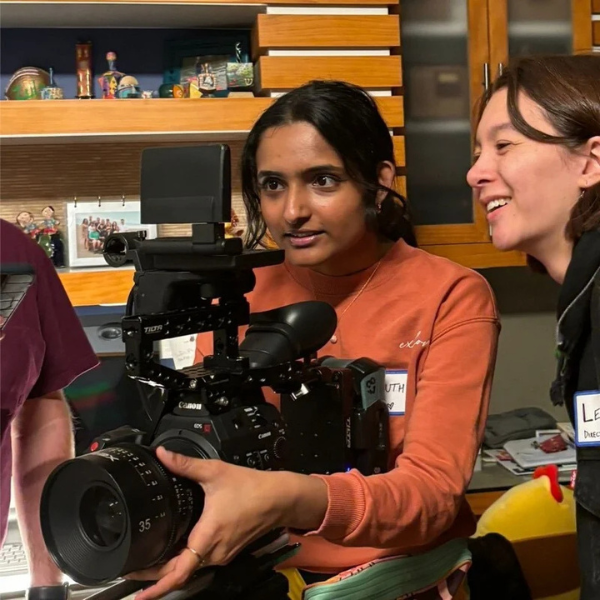
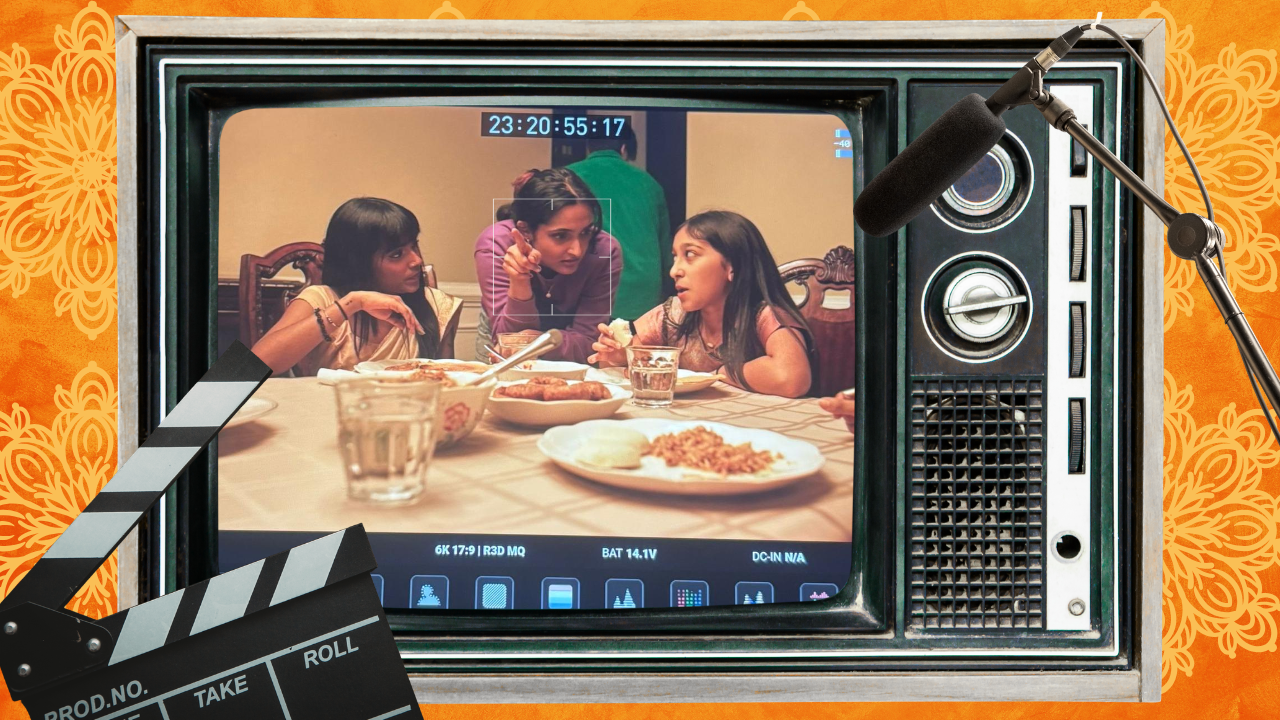
I remember being on a female-led set in Atlanta, Georgia, working on my short film Illam, when it fully clicked: filmmaking is political—not just in content, but in process. Someone has to decide which stories get made. As producers, that someone is often us. I was surrounded by women who understood that even when it’s hard, it’s important for BIPOC women to take up space on a film set, especially when telling stories about our families and culture. We had to sit with some discomfort at times, but it felt necessary like we were paving the path for future generations.
Producing means holding a certain kind of power to shift culture. We help determine what moves forward, who gets hired and what audiences ultimately see. For me, that responsibility goes beyond budgets and logistics. It is about intention.
It starts with the teams we build. Choosing to work with women and BIPOC filmmakers is not just about representation. It is about access. It is about creating opportunities and building teams that reflect the world we live in. It is also about creating environments where people feel safe enough to contribute honestly. When people feel safe, unheard voices begin to shine.
And it continues with the stories we support. Finding directors whose values align with your own, not just creatively but ethically, is part of the job. The goal is not just to make films. It is to make films that reflect the world we actually live in, or the one we are trying to build.
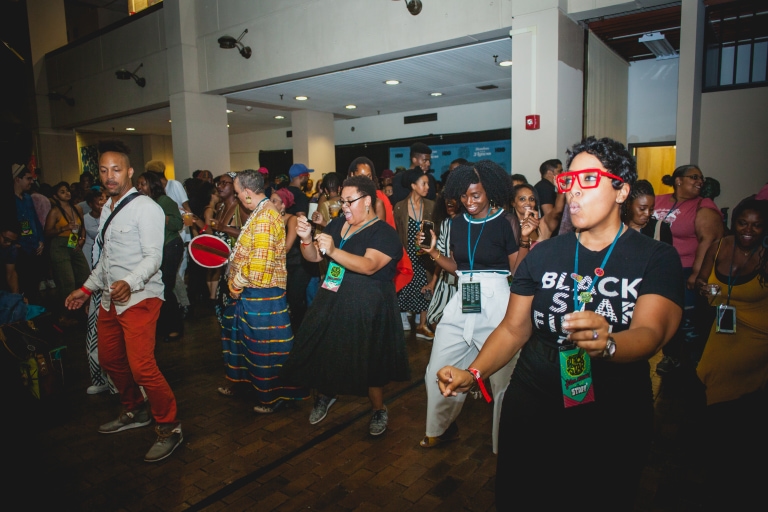
There are organizations doing this work every day. Communities like Brown Girls Doc Mafia, Chicken & Egg Films and Cinefemme are creating real pathways for women and BIPOC filmmakers through funding, mentorship and support. Festivals like Reel Sisters of the Diaspora Film Festival continue to amplify voices that mainstream cinema has historically ignored.
These spaces matter because they challenge the idea that our stories are niche. They remind us that our stories are necessary.
As a Tamil woman producing films in my twenties, I often come back to that lyric from 27 CLUB. The systems RANJ X CLIFR describe are real. But so is our ability to reshape them.
Producing, for me, is not just about getting a project made. It is about choosing what deserves to exist and who gets to help tell them. Every team we build, every director we collaborate with, and every project we decide to support quietly shapes the industry we are leaving behind for others. Producing with purpose means recognizing that power and using it responsibly. For me, that means making space for voices that once felt invisible.
Including my own.
Tags:
Categories:
Home Features /
Stories /
Member Story /