


Amma’s Pride team has been returning again and again to Bruce Lee’s words: “Be water, my friend.”
Water moves quietly and steadily. It does what it needs to do and doesn't wait for permission. Staying still is not in its nature. It can be gentle, yet it can be mighty. It weathers porous rocks. It finds openings and reshapes the landscape with patience, not power.
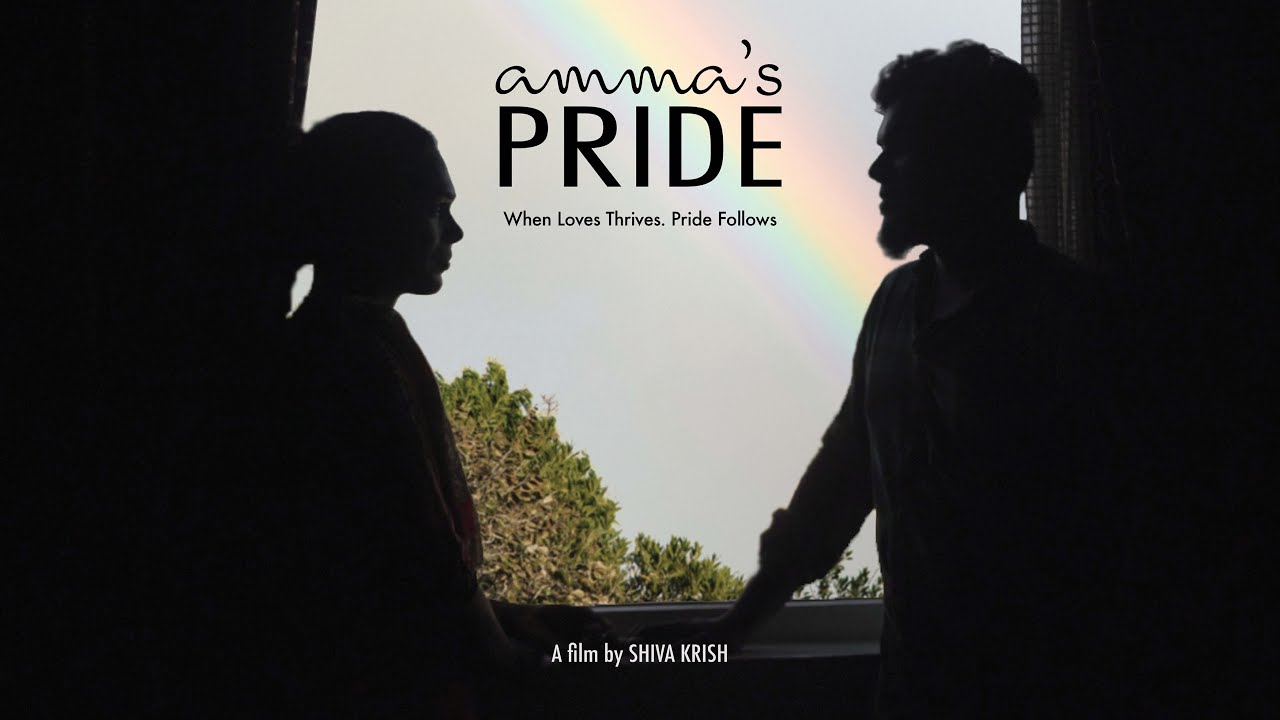
Amma's Pride is a cinematic and intimate story chronicling mother Valli’s unwavering love and advocacy for her trans daughter, Srija, as she navigates love, marriage, and acceptance. Significantly, Srija's marriage is Tamil Nadu’s first legally recognized trans marriage. The film is a powerful testament to the transformative power of unconditional acceptance and arrives at a moment when conversations around trans rights and family inclusion could not be more urgent.
The impact of Amma’s Pride in the world was going to be just like how water moves. Our team understood that instinctively, right from the beginning. We felt it first in Krakow, Poland, our World Premiere, our very first public screening. A young trans person stayed back afterward, visibly moved. The next day, on their birthday, they came again, this time with their mother. They didn’t understand Tamil, but they understood mother Valli. They felt her love. And they told us they had never seen parental affirmation of a trans person on screen before.
From that day forward, we chose to move like water. "Be Water." As a team, we anchored ourselves in a single purpose: no matter the noise, the pace, or the hurdles, we were here for impact. We flowed together because this film had work to do—to raise awareness about parental and family support for trans and queer folks, and the importance of marriage equality, particularly among South Asians and the South Asian diaspora. Finding this unified purpose was the most important thing we ever did.
We didn’t have a blueprint for an impact campaign. There wasn’t a model to follow especially in India. So we built one. Slowly, imperfectly, instinctively.
We met with activists, social workers, and students.
We held Braintrust screenings in Chennai and New York.
We screened the film inside the narrow corridors of government slum housing.
We applied for grant after grant and collected so many rejections that “no” was default.
We said “yes” to every opportunity, even the improbable ones, because one connection could shift everything.
We waited for hours in government offices for five minutes of possibility.
We reached out to lawyers, parents, gatekeepers, and allies.
We kept going because water keeps moving.
And slowly, the landscape began to shift.
Today, the film has screened in 60+ cities across every continent (yes, even Antarctica),
has been featured by BBC World in 40 languages. We’ve created impact screenings and workshops across India and in Jaffna, Sri Lanka. And somewhere along this winding path, the film unexpectedly won the Best Short Documentary award at the International Documentary and Short Film Festival in Kerala, thereby qualifying it for the Academy Awards in the Documentary Short category.
Our team was back at the drawing board. What do we do now? Almost everyone we spoke to told us the same thing: there is no way to compete without extraordinary budgets. They claimed that an Oscar campaign is built for those with influence, and that people like us—outsiders, independents, four people trying to carry a story on our backs—should temper our expectations. The industry wasn’t designed for films like ours, or for filmmakers like us, or for the communities we represent. And the four of us knew that story already. We’ve heard versions of it all our lives:
“This isn’t for you.”
“Don’t aim too high.”
The gatekeeping felt familiar, as did the sense that the room was never built for us in the first place. Truth be told, an Academy campaign was never part of our plan. Our purpose and vision, then and now, is to build physical and emotional spaces where: trans people see their joy reflected; queer people witness what holistic acceptance and belonging can look like; and communities learn that allyship begins at home.
In a year when anti-trans legislation has surged globally, and when autonomy and safety are being stripped away, our goal remained the same: to make sure that Srija and Valli’s story reaches audiences worldwide and that society at large understands that we all have a role to play.
Instead of shying away from the Oscar campaign or trying to do what everyone typically does, we decided to embrace it to further our mission. We’ve never looked at awards as the finish line, but we know that the qualification status opens doors. Therefore, we asked ourselves: Why not try to break open a system that insists only the well-funded and well-connected deserve a platform? Why not attempt to create a blueprint so future filmmakers, especially outsiders like us, can understand and navigate a system that was never designed for them? Why not use every single one of those openings to push trans stories, trans joy, and trans rights into the mainstream where they belong?
.jpg)
In October 2025, on National Coming Out Day, we held a 48-hour global virtual release of the film. Our social media campaign reached 275,000 people, and the film was viewed in 13 countries, 21 U.S. states, and 14 Indian states.
For Trans Awareness Month, we have partnered with several organizations in the U.S., UK, and India that work to improve the lives of queer and trans people to screen Amma’s Pride and uplift their work [FYC Panel Conversation]. We are culminating this effort with a screening and panel in New Delhi, where we’ll gather Supreme Court lawyers, activists, and advocates to imagine what the future of trans rights in India must look like.
Whether we advance or not is irrelevant; our commitment remains unchanged. Through sharing Amma’s Pride, we want to amplify what is possible in a trans person’s life with family and community support, and to carve an awards campaign that centers and celebrates the film and its message. Furthermore, we want to make noise about the unrealistic and—dare I say—unethical practices surrounding award campaigns that filmmakers currently follow simply because “this is how it is done.” We don’t want to fit in, but instead we want to encourage filmmakers to take more steps away from these harmful awards campaign practices and “BE WATER.” Because water refuses to stop, refuses to shrink, and quietly insists: another way is always possible.